Mobile App Development Cost in India in 2026: Complete Pricing Guide
Mobile App Development Cost in India in 2026: Complete Pricing Guide
Building a mobile application is no longer limited to startups and consumer businesses. Enterprises across industries are investing in mobile apps to improve customer experiences, streamline internal operations, automate workflows, enable field teams, and create new digital revenue channels.
But one question usually comes before development begins:
How much does mobile app development cost in India?
The short answer is that there is no single price.
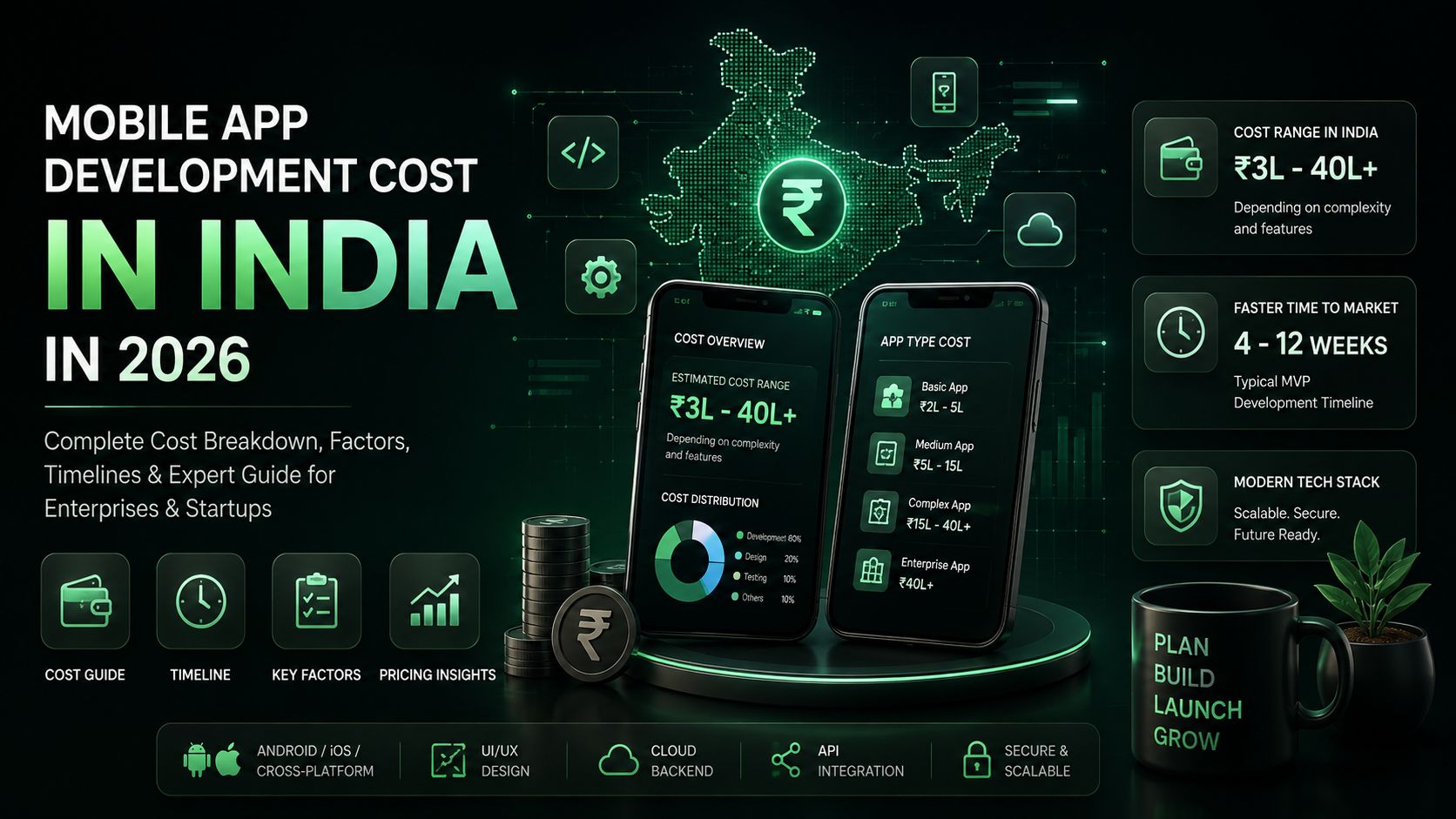
In 2026, mobile app development cost in India can range from around ₹2 lakh for a relatively simple application to ₹40 lakh or more for a complex enterprise-grade mobile platform. Large-scale applications involving advanced security, multiple integrations, real-time features, AI, complex backend systems, analytics, and multiple user roles can go significantly beyond this range.
For enterprises, the development cost depends less on the number of screens and more on the complexity of the product ecosystem behind those screens.
This guide explains mobile app development costs in India in detail, including different app categories, features, development approaches, technology choices, timelines, hidden costs, maintenance, and the factors enterprises should evaluate before approving a development budget.
In This Guide, You'll Learn
- How much mobile app development costs in India in 2026
- The cost of simple, medium-complexity, and enterprise mobile apps
- What features have the biggest impact on development costs
- Android, iOS, and cross-platform development costs
- How much enterprise mobile applications typically require
- How development teams calculate app development pricing
- How long mobile app development takes
- The hidden costs businesses often overlook
- How to reduce development costs without sacrificing quality
- How to choose the right development approach and technology stack
What Is the Average Mobile App Development Cost in India?
The average mobile app development cost in India depends heavily on the scope and complexity of the application.
A basic mobile application with a limited number of screens, simple authentication, static content, and minimal backend requirements can start around ₹2–5 lakh.
A medium-complexity application with user accounts, APIs, payments, notifications, dashboards, third-party integrations, and a custom backend can cost approximately ₹5–15 lakh.
A complex enterprise application with advanced workflows, multiple user roles, real-time functionality, cloud infrastructure, security controls, analytics, integrations, and scalable backend architecture can cost ₹15–40 lakh or more.
For very large enterprise platforms, the budget can exceed ₹40 lakh depending on the number of applications, integrations, users, compliance requirements, and infrastructure involved.
Mobile App Development Cost in India
| App Type | Estimated Cost | Typical Timeline |
|---|---|---|
| Basic App | ₹20000–1 lakh | 4–8 weeks |
| Small Business App | ₹3–8 lakh | 6–10 weeks |
| Medium-Complexity App | ₹5–15 lakh | 10–16 weeks |
| E-commerce App | ₹8–20 lakh | 12–20 weeks |
| Fintech App | ₹12–30+ lakh | 16–28 weeks |
| Healthcare App | ₹10–25+ lakh | 14–24 weeks |
| On-Demand App | ₹8–20 lakh | 12–20 weeks |
| SaaS Mobile App | ₹10–25+ lakh | 14–24 weeks |
| Enterprise Mobile App | ₹15–40+ lakh | 18–32+ weeks |
| Large Enterprise Platform | ₹40 lakh+ | 6–12+ months |
These are planning ranges rather than fixed quotations. The actual cost depends on product scope, design requirements, integrations, security, platforms, backend complexity, team composition, and long-term scalability requirements.
Why Does Mobile App Development Cost So Much?
A mobile application is rarely just a mobile interface.
A production-ready application may require:
- Mobile frontend development
- Backend development
- Database architecture
- API development
- UI/UX design
- Authentication
- Payment integration
- Push notifications
- Cloud infrastructure
- Analytics
- Security
- Testing
- DevOps
- App Store deployment
- Maintenance and monitoring
For an enterprise application, the mobile app may also need to communicate with existing ERP, CRM, payment, identity, logistics, HR, or business intelligence systems.
This is why two applications with similar-looking interfaces can have dramatically different development costs.
Mobile App Development Cost by Complexity
The most useful way to estimate mobile app development cost is by complexity.
#1. Basic Mobile App
Estimated cost:
₹2–5 lakh
Estimated timeline:
4–8 weeks
A basic app generally contains a limited number of screens and straightforward functionality.
Typical features include:
- Splash screen
- Onboarding
- Login
- Registration
- User profile
- Static content
- Basic search
- Simple forms
- Push notifications
- Basic admin panel
Examples include:
- Company information apps
- Internal information apps
- Basic service apps
- Content applications
- Simple utility applications
These applications generally have limited backend complexity and do not require complicated integrations.
- Medium-Complexity Mobile App
Estimated cost:
₹5–15 lakh
Estimated timeline:
10–16 weeks
Medium-complexity applications typically require a custom backend and multiple business workflows.
Common features include:
- User authentication
- Role-based access
- Profiles
- Search and filtering
- Payments
- Notifications
- Chat
- API integrations
- Admin dashboard
- Analytics
- File uploads
- Location services
- Cloud storage
Examples include:
- E-commerce applications
- Booking platforms
- Education applications
- Customer portals
- Employee applications
- Service marketplaces
At this stage, architecture becomes much more important because the application needs to support real users and real business processes.
3. Complex Enterprise Mobile App
Estimated cost:
₹15–40+ lakh
Estimated timeline:
18–32+ weeks
Enterprise applications usually involve significantly more than mobile UI development.
They may require:
- Multiple user roles
- Complex workflows
- Enterprise authentication
- SSO
- Advanced permissions
- Real-time communication
- Offline functionality
- Geolocation
- Advanced analytics
- Payment systems
- ERP integration
- CRM integration
- Custom APIs
- Cloud infrastructure
- Security monitoring
- Audit logs
- Data encryption
- Automated testing
- CI/CD pipelines
For example, a large logistics company may require a driver application, customer application, operations dashboard, admin panel, real-time tracking system, notification service, and integration with its existing enterprise software.
Such a system is closer to a complete digital platform than a standalone mobile application.
Enterprise Mobile App Development Cost
For enterprise businesses, the question should not simply be:
"How much does an app cost?"
A better question is:
"What technology investment is required to solve the business problem reliably at scale?"
An enterprise mobile application can cost ₹15–40 lakh for a relatively focused product, while larger platforms can require ₹40 lakh or more.
Enterprise costs increase because of requirements such as:
Security
Enterprise applications may require:
- Secure authentication
- Multi-factor authentication
- Encryption
- Role-based access
- Session management
- Secure APIs
- Audit logging
- Data protection
Integrations
Enterprise software often needs to connect with existing systems.
Examples include:
- SAP
- Salesforce
- Microsoft Dynamics
- Oracle
- Custom ERP systems
- CRM systems
- Payment gateways
- Identity providers
- Logistics platforms
- Business intelligence systems
Each integration introduces development, testing, security, and maintenance requirements.
Scalability
An application designed for 1,000 users does not necessarily require the same architecture as one designed for 1 million users.
Enterprise architecture may require:
- Load balancing
- Caching
- Database optimization
- Horizontal scaling
- Cloud infrastructure
- Monitoring
- Automated deployments
- Disaster recovery
Compliance
Depending on the industry, enterprises may also need to consider:
- Data privacy
- Financial regulations
- Healthcare requirements
- Industry-specific compliance
- Internal security policies
- Data residency
- Audit requirements
These requirements can substantially affect development costs.
Mobile App Development Cost by Platform
Another important cost factor is the platform.
Businesses typically choose between:
- Android
- iOS
- Cross-platform development
- Native development for both platforms
Android App Development
Android development can be appropriate when the target audience primarily uses Android devices.
Android applications need to account for a wide variety of:
- Screen sizes
- Hardware configurations
- Operating system versions
- Device manufacturers
- Performance levels
For enterprise applications used on controlled company devices, this complexity may be significantly lower.
iOS App Development
iOS applications generally target a more controlled hardware ecosystem.
However, enterprises may still need to support:
- Multiple iPhone generations
- iPad
- Different screen sizes
- Apple authentication requirements
- App Store policies
- Platform-specific UI behavior
Cross-Platform App Development
Cross-platform technologies such as Flutter and React Native allow teams to share a substantial portion of the application code across Android and iOS.
This can reduce development effort when the product requirements are suitable for cross-platform development.
However, cross-platform development is not automatically cheaper in every situation.
The correct decision depends on:
- Product complexity
- Native functionality
- Performance requirements
- Existing team expertise
- Required integrations
- Long-term maintenance
- Platform-specific features
Native vs Cross-Platform App Development
| Factor | Native Development | Cross-Platform Development |
|---|---|---|
| Android | Excellent | Excellent |
| iOS | Excellent | Excellent |
| Code Sharing | Low | High |
| Initial Development Speed | Moderate | Usually Faster |
| Platform-Specific Features | Excellent | Depends on integrations |
| Maintenance | Separate codebases | Shared codebase |
| Best For | Highly platform-specific apps | Most business applications |
| Cost | Potentially Higher | Potentially Lower |
For many business and enterprise applications, cross-platform development can be an efficient option when the product does not require extensive platform-specific functionality.
How Features Affect Mobile App Development Cost
Features are one of the biggest contributors to development cost.
A simple login screen might require relatively little development effort.
A secure enterprise authentication system involving SSO, multi-factor authentication, role management, session controls, and audit logging is considerably more complex.
Common Features and Their Impact
| Feature | Cost Impact |
|---|---|
| Login & Registration | Low |
| Social Login | Low–Medium |
| User Profiles | Low–Medium |
| Search | Low–Medium |
| Advanced Filters | Medium |
| Push Notifications | Low–Medium |
| Payments | Medium |
| Chat | Medium–High |
| Video Calling | High |
| Real-Time Tracking | High |
| AI Features | Medium–High |
| Offline Mode | High |
| Complex Analytics | Medium–High |
| Enterprise SSO | High |
| ERP Integration | High |
| CRM Integration | Medium–High |
| Advanced Security | High |
| Multi-Tenant Architecture | High |
The more interconnected the features are, the more development effort is required.
UI/UX Design Cost
Design is another important part of the mobile app development budget.
A professional enterprise application usually requires more than attractive screens.
The design team needs to consider:
- User journeys
- Information architecture
- Wireframes
- Prototypes
- Design systems
- Accessibility
- Responsive layouts
- Interaction states
- Error states
- Empty states
- Loading states
- Platform-specific behavior
A simple application may require a relatively small design system.
An enterprise application with dozens of workflows may require a complete design system covering hundreds of components and states.
Backend Development Cost
The backend is often one of the largest components of application development.
A backend can include:
- APIs
- Authentication
- Database
- Business logic
- File storage
- Notifications
- Payment processing
- Search
- Analytics
- Admin controls
- Background jobs
- Integrations
A simple application might use a relatively straightforward backend.
An enterprise system may require a highly scalable architecture with multiple services, queues, caching, observability, and automated deployment pipelines.
For this reason, estimating the app only from the number of mobile screens can lead to serious under-budgeting.
Third-Party Integrations
Integrations can significantly change the final project cost.
Common integrations include:
- Payment gateways
- Google Maps
- Apple Maps
- Firebase
- Twilio
- Email services
- SMS providers
- CRM platforms
- ERP systems
- Cloud storage
- Analytics platforms
- Identity providers
- AI APIs
A basic third-party API integration may take only a few days.
An enterprise integration with a legacy ERP can take weeks or longer because of authentication, data mapping, business rules, testing, and coordination with internal teams.
AI Features and Their Impact on App Cost
AI is becoming an increasingly common part of modern mobile applications.
Examples include:
- AI chat assistants
- Recommendation engines
- Document analysis
- Voice assistants
- Image recognition
- Predictive analytics
- AI-powered search
- Content generation
- Automated customer support
Adding an AI API to an application may be relatively straightforward.
Building a production-grade AI system is a different problem.
Costs can increase when the project requires:
- Custom models
- Retrieval-augmented generation
- Vector databases
- Data pipelines
- Model evaluation
- AI safety controls
- Custom inference infrastructure
- Large-scale usage optimization
For enterprise applications, AI should be treated as a product capability rather than simply another API integration.
Hidden Costs of Mobile App Development
The development quotation is not always the complete technology budget.
Businesses should account for additional costs.
-
App Store and Play Store Accounts
Publishing applications requires developer accounts and compliance with platform policies. -
Cloud Infrastructure
Depending on usage, you may need to pay for:
- Servers
- Databases
- Storage
- CDN
- Backups
- Monitoring
- Networking
- Third-Party Services
Some applications depend on paid services for:
- SMS
- Maps
- Payments
- Authentication
- AI
- Analytics
- Communication
- Maintenance
Applications need ongoing updates after launch.
Maintenance may include:
- Bug fixes
- Security updates
- OS compatibility
- Dependency updates
- Performance improvements
- Feature enhancements
-
Security
Security testing and infrastructure hardening may add to the project budget, especially for enterprise and regulated industries. -
App Store Compliance
Applications may require changes to satisfy platform policies or review requirements.
Mobile App Maintenance Cost in India
A common planning approach is to allocate approximately 15–25% of the original development budget annually for maintenance and ongoing improvements.
For example, if an application costs ₹20 lakh to build, an organization may plan an additional ₹3–5 lakh or more per year depending on the required support level.
However, maintenance is not always a fixed percentage.
An enterprise application with frequent feature releases, multiple integrations, high traffic, and strict uptime requirements can require a much larger ongoing engineering budget.
Mobile App Development Timeline
Development timelines depend on scope.
| Project Type | Typical Timeline |
|---|---|
| Basic App | 4–8 weeks |
| Small Business App | 6–10 weeks |
| Medium App | 10–16 weeks |
| E-commerce App | 12–20 weeks |
| Complex App | 16–24 weeks |
| Enterprise Application | 18–32+ weeks |
| Large Enterprise Platform | 6–12+ months |
A typical enterprise project may follow this structure:
Phase 1: Discovery
Duration:
1–2 weeks
Activities include:
- Business requirement analysis
- User research
- Feature prioritization
- Technical discovery
- Integration assessment
- Product roadmap
Phase 2: UX/UI Design
Duration:
2–5 weeks
Activities include:
- User flows
- Wireframes
- High-fidelity designs
- Design system
- Interactive prototype
Phase 3: Architecture
Duration:
1–3 weeks
The team defines:
- Mobile architecture
- Backend architecture
- Database structure
- API contracts
- Security architecture
- Cloud infrastructure
Phase 4: Development
Duration:
6–20+ weeks
The engineering team develops the mobile application, backend, integrations, and administrative systems.
Phase 5: Testing
Duration:
2–5 weeks
Testing may include:
- Functional testing
- API testing
- Device testing
- Performance testing
- Security testing
- Regression testing
- User acceptance testing
Phase 6: Deployment
Duration:
1–2 weeks
The application is prepared for:
- Production infrastructure
- App Store submission
- Google Play submission
- Monitoring
- Analytics
- Release management
What Factors Determine Mobile App Development Cost?
Several factors determine the final price.
1. Application Complexity
The more complex the workflows, the higher the development effort.
2. Number of Platforms
Building separately for Android and iOS can increase development requirements.
Cross-platform development can reduce duplicated effort in suitable projects.
3. Number of Features
Every feature introduces design, development, testing, and maintenance requirements.
4. Backend Complexity
Applications with sophisticated business logic require more backend engineering.
5. Integrations
Enterprise integrations can become a major cost driver.
6. Security Requirements
Financial, healthcare, enterprise, and government applications may require significantly stronger security controls.
7. Design Requirements
Custom animations, complex workflows, accessibility, and enterprise design systems can increase design effort.
8. Development Team
The team's location, expertise, structure, and engagement model affect the overall budget.
9. Technology Stack
The chosen architecture and technologies affect development speed, scalability, and maintenance.
10. Post-Launch Requirements
Applications requiring continuous development need an ongoing engineering budget.
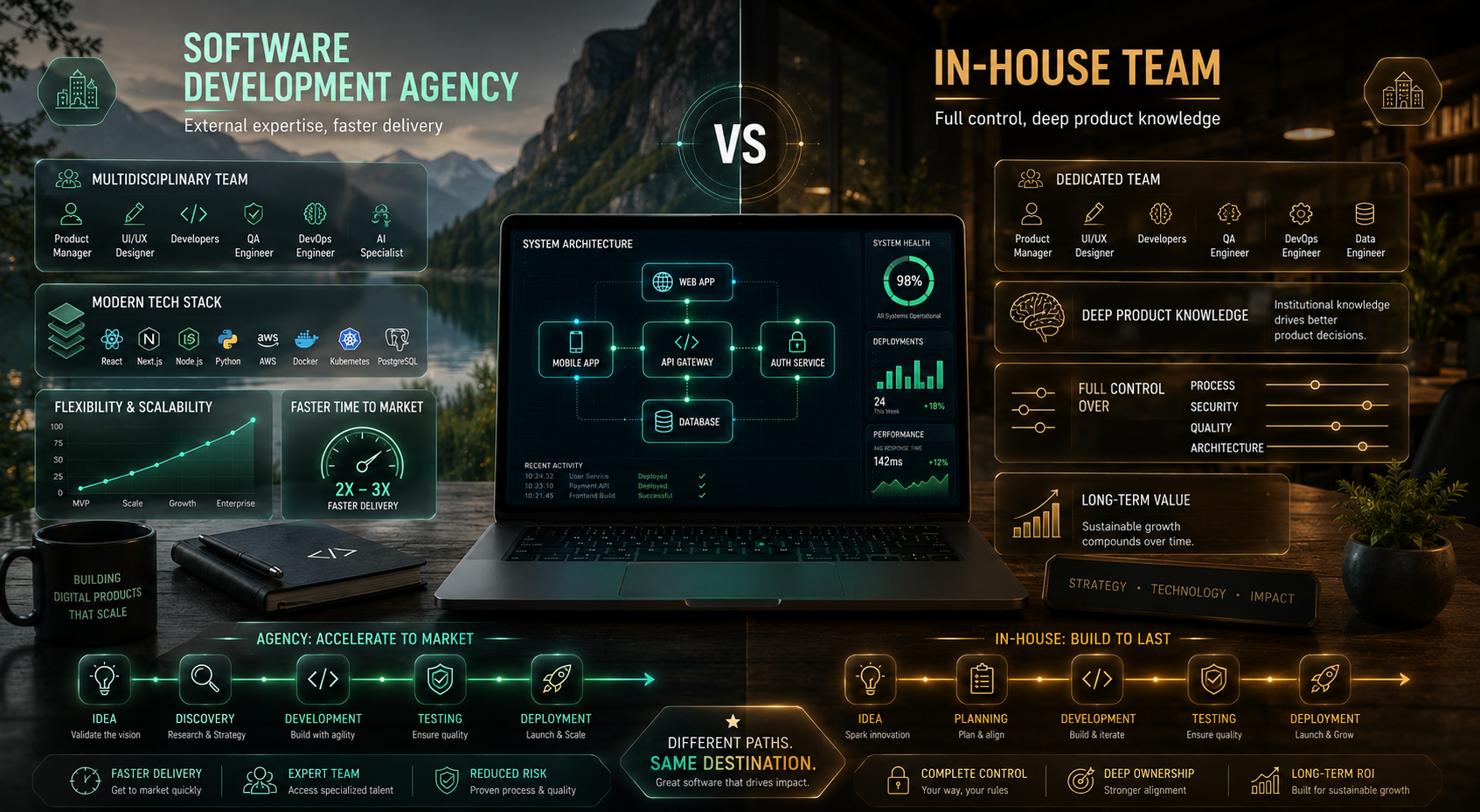
In-House Team vs Outsourcing vs Software Agency
Enterprises generally have three major development options.
| Factor | In-House Team | Freelancer | Software Agency |
|---|---|---|---|
| Initial Cost | High | Low | Medium–High |
| Hiring Time | High | Low | Low |
| Technical Expertise | Depends on Team | Depends on Individual | Usually Broad |
| Scalability | High | Limited | High |
| Project Management | Internal | Internal | Usually Included |
| Enterprise Processes | High | Variable | Usually Strong |
| Long-Term Support | Strong | Variable | Strong |
| Best For | Large Internal Teams | Small Projects | Product Development |
For strategic enterprise applications, the development partner should be evaluated on architecture, security, communication, testing, scalability, and long-term support rather than simply hourly pricing.
How to Reduce Mobile App Development Cost
Reducing cost does not mean choosing the cheapest developer.
The better approach is reducing unnecessary development.
1. Start With a Clearly Defined Scope
Before development begins, document:
- Business goals
- Target users
- Core workflows
- Required features
- Integrations
- Security requirements
- Success metrics
2. Prioritize Features
Separate requirements into:
Must Have
Should Have
Could Have
Future
This prevents unnecessary functionality from entering the first release.
3. Build an MVP
An MVP allows the business to validate the core product before investing heavily in advanced functionality.
For example, instead of building a complete enterprise marketplace immediately, the first release could validate:
- User registration
- Product discovery
- Core transaction
- Notifications
- Basic administration
Advanced analytics, automation, AI, and secondary workflows can be introduced later.
4. Choose the Right Architecture
Overengineering an early product can waste money.
At the same time, underengineering an enterprise application can create expensive technical debt.
The architecture should match expected business scale.
5. Reuse a Design System
A reusable component system can significantly improve design and development efficiency.
6. Use Cross-Platform Development Where Appropriate
For many business applications, a shared mobile codebase can reduce duplicated engineering effort.
7. Plan Integrations Early
Late integration discovery is one of the easiest ways to increase project costs.
Common Mistakes Enterprises Make
Mistake 1: Choosing a Developer Based Only on Price
The cheapest quotation may not be the cheapest solution.
Poor architecture can create:
- Performance problems
- Security issues
- Technical debt
- Expensive rewrites
Mistake 2: Starting Development Without Discovery
Without clear requirements, development teams often build features that later need to be changed.
Mistake 3: Ignoring Backend Complexity
The mobile application is only one layer of the product.
Mistake 4: Treating Security as a Final Step
Security should be considered during architecture and development rather than added just before launch.
Mistake 5: Not Planning for Scale
An architecture that works for 500 users may not work efficiently for 500,000 users.
Mistake 6: Ignoring Maintenance
Launching the app is not the end of the software lifecycle.
Mistake 7: Building Every Feature at Once
Large initial scope increases both cost and time.
How to Get an Accurate Mobile App Development Cost Estimate
Before requesting quotations, prepare a clear product brief.
Include:
- Business objective
- Target users
- Platforms
- User roles
- Core features
- Integrations
- Security requirements
- Expected user volume
- Design requirements
- Backend requirements
- Analytics requirements
- Launch target
- Post-launch support expectations
A professional development partner can then convert this information into:
- Feature breakdown
- Technical architecture
- Development phases
- Timeline
- Team structure
- Cost estimate
- Maintenance plan
This produces a much more reliable estimate than simply asking:
"How much does an app cost?"
Example: Enterprise Mobile App Budget
Consider a company that wants an employee operations application.
The platform requires:
- Employee login
- SSO
- Role-based access
- Attendance
- Location tracking
- Task management
- Notifications
- Document uploads
- Manager dashboard
- Admin dashboard
- API integration with HR software
- Analytics
A realistic project budget could fall within the ₹15–30+ lakh range depending on the depth of the integrations, security requirements, design complexity, backend architecture, and number of platforms.
If the company also requires real-time tracking, offline functionality, advanced analytics, AI features, multiple enterprise integrations, and high-scale infrastructure, the project can move beyond this range.
This illustrates why feature count alone should not be used to estimate cost.
Example: Customer-Facing Enterprise App
Consider a retail enterprise building a customer application.
The product may include:
- Account management
- Product catalogue
- Search
- Personalized recommendations
- Cart
- Payments
- Order tracking
- Loyalty program
- Push notifications
- Customer support
- Analytics
- CRM integration
A project of this scope can easily move into the ₹15–30+ lakh range.
The final cost depends on whether the business already has backend systems, how much needs to be developed from scratch, and how complex the integrations are.
Mobile App Development Cost: India vs Other Markets
India remains an attractive software development market because businesses can access experienced engineering teams at competitive rates compared with several Western markets.
However, hourly rate alone should not determine the development partner.
A lower hourly rate can become expensive if:
- Requirements are poorly understood
- Development takes longer
- Architecture is weak
- Communication is poor
- Quality assurance is limited
- The application needs to be rebuilt
Enterprises should evaluate the total cost of ownership rather than only the initial development quotation.
What Should an Enterprise Development Proposal Include?
A professional proposal should clearly explain:
- Business understanding
- Scope of work
- Functional requirements
- Technical architecture
- Technology stack
- UX/UI approach
- Development methodology
- Testing strategy
- Security approach
- Deployment strategy
- Timeline
- Team structure
- Pricing
- Maintenance
- Ownership and intellectual property
Transparency at this stage reduces misunderstandings later.
Best Practices for Enterprise Mobile App Development
1. Define Business Outcomes
Do not build an application simply because competitors have one.
Define what the application should improve.
For example:
- Reduce operational costs
- Increase customer retention
- Improve employee productivity
- Increase sales
- Automate manual processes
- Improve customer service
2. Design Around User Workflows
Enterprise applications often fail because they are designed around organizational structures rather than user needs.
3. Build Security Into the Architecture
Security should be part of the system from the beginning.
4. Use Scalable APIs
Well-designed APIs allow the mobile application to communicate efficiently with other business systems.
5. Automate Testing
Automated testing reduces regression risk as the application grows.
6. Monitor the Production Application
Use monitoring and analytics to understand:
- Crashes
- Performance
- User behavior
- API failures
- Conversion
- Retention
7. Plan for Continuous Improvement
The first version should be treated as the beginning of the product lifecycle rather than the final version.
Frequently Asked Questions
How much does it cost to develop a mobile app in India in 2026?
Mobile app development in India can cost approximately ₹2–5 lakh for a basic application, ₹5–15 lakh for a medium-complexity application, and ₹15–40+ lakh for complex enterprise applications. Large platforms with advanced integrations, AI, security, and scalability requirements can cost more.
How much does an enterprise mobile app cost in India?
Enterprise mobile applications typically start around ₹15 lakh and can exceed ₹40 lakh depending on functionality. Security, integrations, backend architecture, multiple platforms, compliance, scalability, and administrative systems are major cost factors.
Is mobile app development cheaper in India?
India can offer competitive software development costs compared with several Western markets. However, businesses should compare the complete project scope, engineering quality, architecture, communication, testing, and long-term maintenance rather than comparing hourly rates alone.
How long does it take to develop a mobile app in India?
A basic application may take 4–8 weeks. Medium-complexity applications commonly take 10–16 weeks, while enterprise applications can require 18–32 weeks or longer. Large platforms may take six months to a year or more.
Is Flutter suitable for enterprise mobile applications?
Flutter can be a strong option for many enterprise applications because it enables teams to share code across platforms while maintaining a consistent user experience. The right choice depends on the application's technical requirements, native integrations, performance needs, and existing infrastructure.
How much does an Android app cost in India?
A basic Android application can start around ₹2–5 lakh, while medium and complex applications can range from ₹5 lakh to ₹40 lakh or more. Features, backend complexity, integrations, security, and design have a greater impact on cost than the Android platform itself.
How much does an iOS app cost in India?
iOS application development can range from approximately ₹2–5 lakh for a basic application to ₹15–40+ lakh for complex enterprise applications. The final budget depends primarily on functionality, backend systems, integrations, security, and product complexity.
What is the cost of maintaining a mobile app?
Businesses often allocate approximately 15–25% of the original development budget annually for maintenance and improvements. Enterprise applications with frequent releases, complex integrations, high traffic, and strict support requirements may require a larger ongoing budget.
Should an enterprise build a native or cross-platform app?
The answer depends on the product. Native development can be appropriate when deep platform-specific capabilities are essential. Cross-platform development can be highly effective for many business applications where shared code, faster development, and consistent experiences are priorities.
How can I reduce mobile app development costs?
Start with a clearly defined scope, prioritize essential features, validate the product through an MVP where appropriate, choose the right architecture, reuse design components, plan integrations early, and select technologies based on long-term requirements rather than initial price alone.
Why Choose Nowic Studio for Mobile App Development?
Choosing a development partner is ultimately about more than building an application.
The right partner should understand the business problem, product strategy, technical architecture, user experience, scalability, and long-term roadmap.
Nowic Studio takes a product-first approach to software development.
Our approach focuses on:
- AI-first product development
- Scalable application architecture
- Modern mobile technologies
- Custom UI/UX
- MVP development
- Enterprise software development
- API and third-party integrations
- Cloud-ready infrastructure
- Long-term maintainability
- 100% code ownership
For startups and enterprises, the objective is not simply to launch an app.
The objective is to build software that can support the business as it grows.
Whether you are validating a new product, modernizing an existing business process, or building an enterprise-grade mobile platform, the development strategy should be based on business outcomes rather than technology alone.
Conclusion
The mobile app development cost in India can range from around ₹2 lakh for simple applications to ₹40 lakh or more for complex enterprise platforms.
However, the actual cost depends on much more than the number of screens.
Platform selection, features, UI/UX, backend architecture, integrations, security, scalability, testing, infrastructure, and ongoing maintenance all influence the final investment.
For enterprise businesses, the most effective approach is to define the business requirements first and then build a technology roadmap around them.
Instead of choosing a development partner solely because they offer the lowest quotation, evaluate their ability to deliver secure, scalable, maintainable software.
A well-planned mobile application can become a long-term business asset. A poorly planned one can become an expensive technical liability.
The best investment is therefore not necessarily the cheapest development project. It is the development strategy that delivers the right product at the right level of complexity while leaving room for future growth.
Ready to Build Your Mobile App?
If you are planning a mobile application for your business, the first step is understanding what you actually need to build and what it should cost.
Nowic Studio can help you evaluate your idea, define the product scope, choose the right technology approach, and create a realistic development roadmap.
Whether you need an MVP, customer-facing mobile application, internal enterprise platform, SaaS product, or AI-powered application, start with a clear technical and product strategy.
Book a free consultation with Nowic Studio to discuss your mobile app idea, requirements, timeline, and estimated development budget.
Written by Nowic Studio Team
Building premium software products & MVPs